
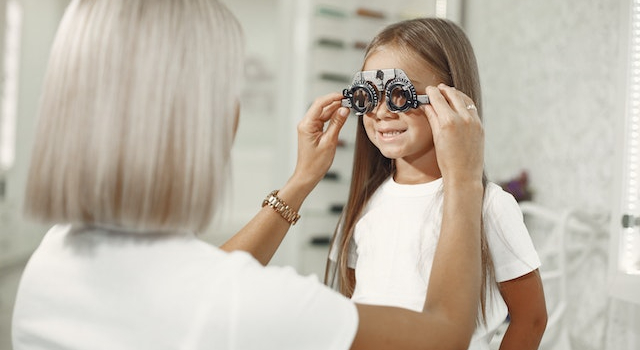
The delicate tapestry of childhood development weaves together various threads, including physical growth, emotional understanding, and cognitive capabilities. Among these, one thread often goes unnoticed until it starts fraying: visual processing. While standard eye tests confirm if your child can discern letters on a chart, behavioural optometry dives deeper, unravelling how their visual system interacts with the brain, affecting learning and day-to-day activities.
Decoding Behavioural Optometry
Traditional optometry primarily corrects refractive errors, ensuring clarity. Behavioural optometry, on the other hand, delves into the nuanced relationship between the eyes and the brain. It's concerned with visual perception, binocular coordination, and even the physical act of reading.
How Can Children Benefit?
- Developing and Strengthening Foundation Skills Required for Learning: Vision and learning are intertwined. Struggles in areas like reading or copying from the board can stem from visual deficiencies. A behavioural optometrist can identify and address these, often unlocking enhanced academic prowess in the child.
- Enhanced Sports Performance: Beyond the classroom, vision plays a crucial role in sports. Accurate depth perception, eye-hand coordination, and tracking abilities can elevate a child's athletic capabilities.
- Boosted Self-Esteem: Visual struggles can inadvertently manifest as behavioural issues or dwindling academic performance, impacting a child's self-confidence. Resolving the root cause can lead to a positive shift in their self-perception.
- Comprehensive Care: Children with special needs or those with conditions like ADHD can benefit immensely. Often, visual processing issues can coexist with other challenges. Behavioural optometry can provide a piece of the holistic care puzzle.
Signs to Look Out For: A Checklist for Parents & Teachers
The Teacher's Observation
Classroom dynamics offer teachers a unique vantage point. They can identify children who might be struggling not just academically but also in ways indicative of visual processing issues.
Signs to Look Out For:
- Avoidance of Close-Up Work: If a student consistently shies away from reading or writing tasks but seems engaged in other activities, it could be more than mere disinterest.
- Frequent Loss of Place: Observing a child losing their place while reading or needing to use their finger to track could be indicative.
- Difficulty with Written Tasks: Messy handwriting, inconsistent spacing, or misalignment might hint at visual-motor challenges.
- Behavioural Issues: Some children might act out, not out of defiance but as a coping mechanism for their visual discomfort.
The Parent's Perspective
Parents know their child's habits, quirks, and challenges better than anyone. However, they might sometimes misinterpret visual processing issues as mere behavioural concerns or academic struggles.
Clues from Daily Life:
- Avoidance of Reading: While not every child is a bookworm, a strong aversion to reading activities might have deeper roots.
- Head Tilting or Covering One Eye: These can be compensatory mechanisms for visual discomfort or binocular vision issues.
- Frequent Headaches or Eye Fatigue: After short durations of visually intensive tasks, complaints of discomfort should be taken seriously.
The Child's Experience
Children may not always articulate their struggles, particularly if they assume everyone perceives the world as they do. Behavioural optometry can help address:
- Double Vision: Imagine trying to read when words seem to overlap or float!
- Blurred Vision at Different Distances: Not just distant blackboards, but even the text in their own notebook might appear unclear.
- Difficulty in Visualizing Concepts: Abstractions like math problems can become even more challenging if there's a visual processing issue.
Recommendations for Parents and Teachers
- Open Communication: Teachers and parents should maintain a dialogue about any observed challenges. A holistic understanding can help pinpoint the root cause.
- Routine Eye Checks: Don't wait for a problem to arise. Regular eye check-ups can catch and address issues before they exacerbate.
- Seek Specialized Help: If a child shows signs of visual processing challenges, consider consulting a behavioural optometrist. Their comprehensive assessment goes beyond just checking for 20/20 vision.
The journey of learning and growth during childhood is a collaboration between educators, guardians, and healthcare professionals. While the basic eye test ensures clarity, behavioural optometry guarantees that a child doesn't just see but also effectively interprets and responds to their environment. Recognizing triggers and seeking specialized care can make a world of difference in a child's academic and personal life, setting them up for success and well-being.